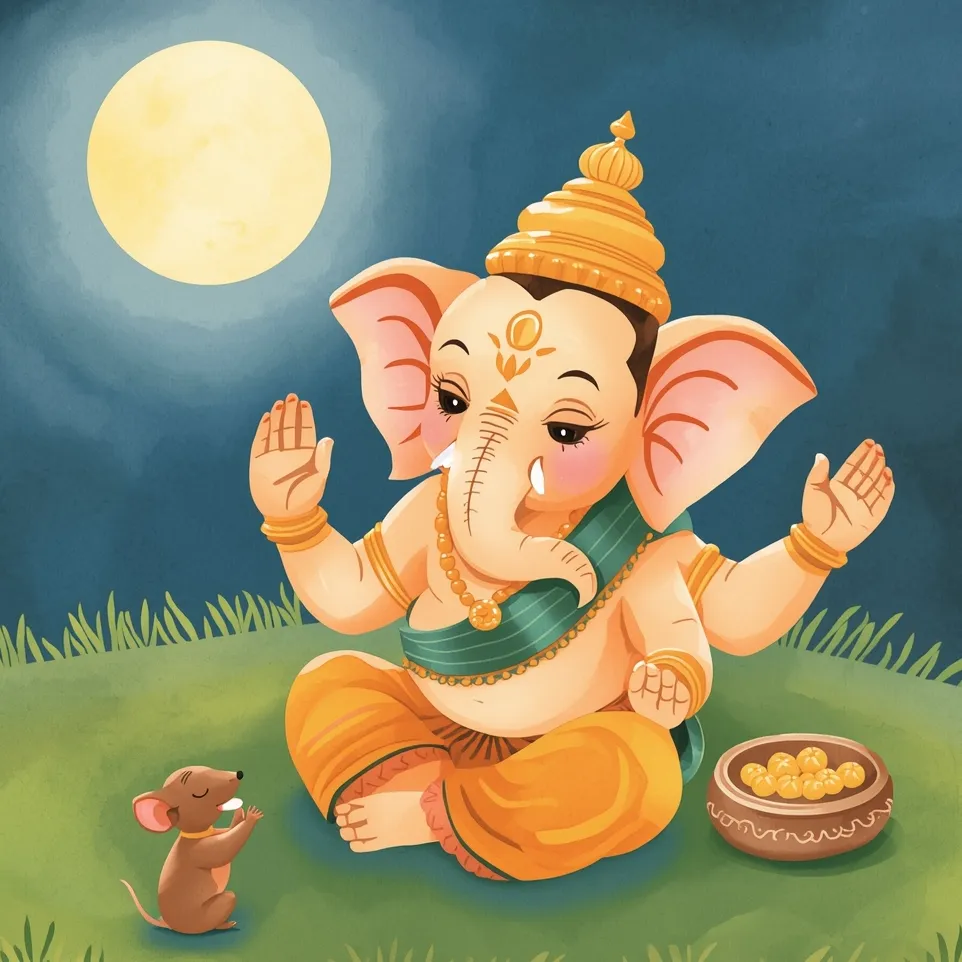
Ganesha and the Moon
Why the moon grows thin and round again, a story about laughing kindly, and saying sorry.
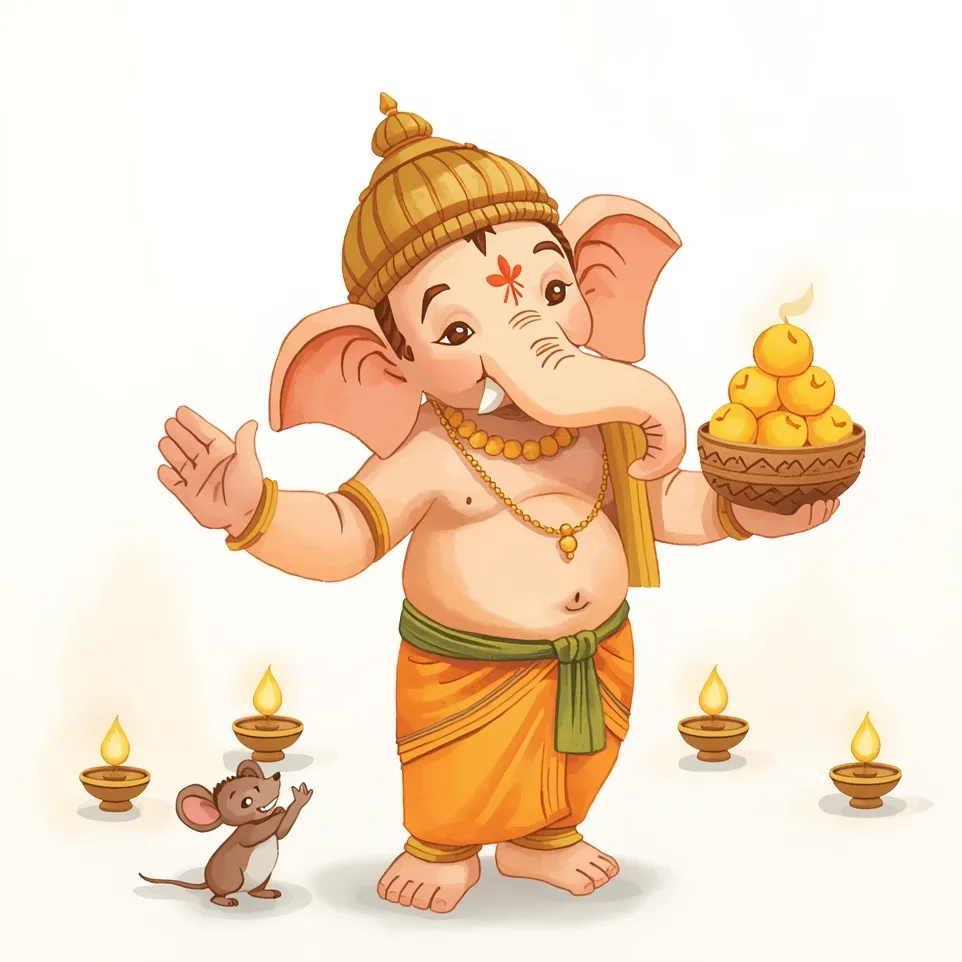
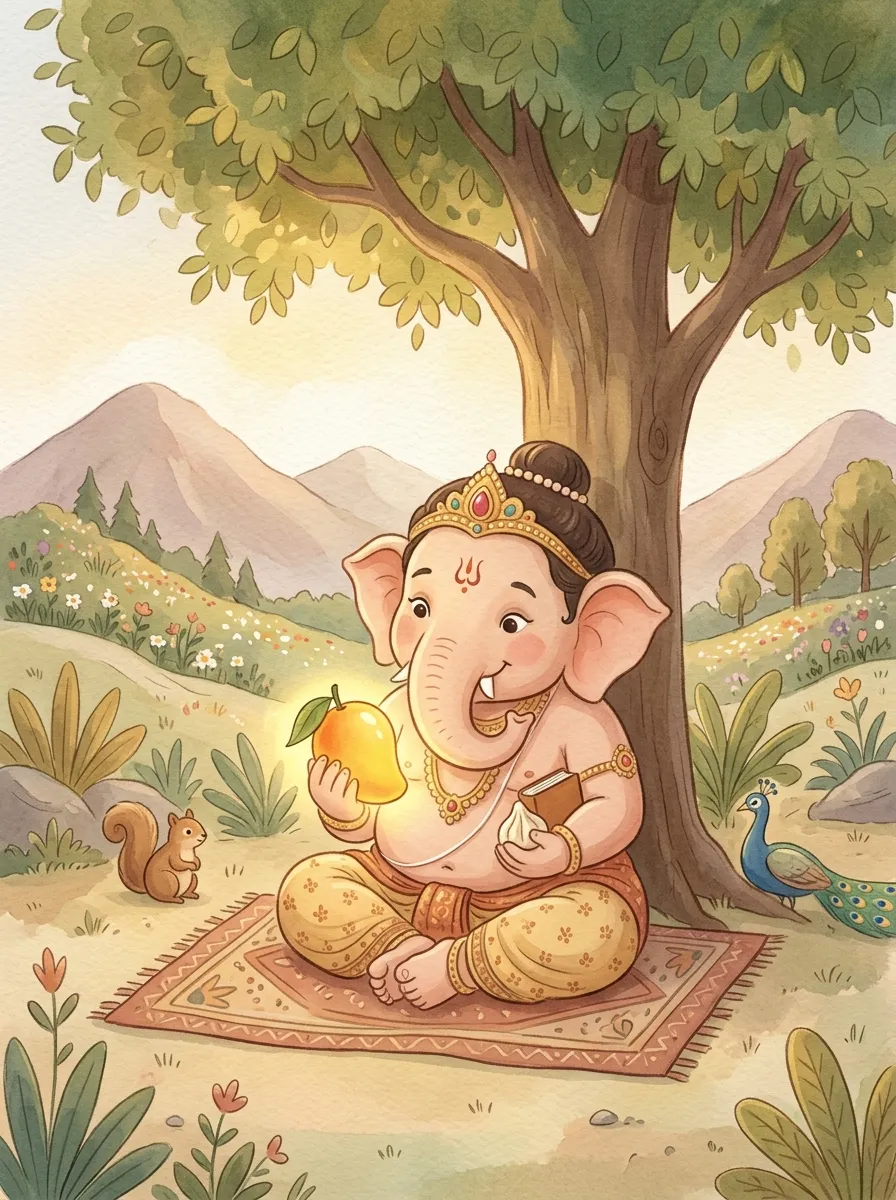
Ganesha loved sweets more than anything in the world. At the festival, everyone brought him modaks — soft and round, filled with coconut and sweet jaggery. He ate one, and then five, and then more than anyone could count.
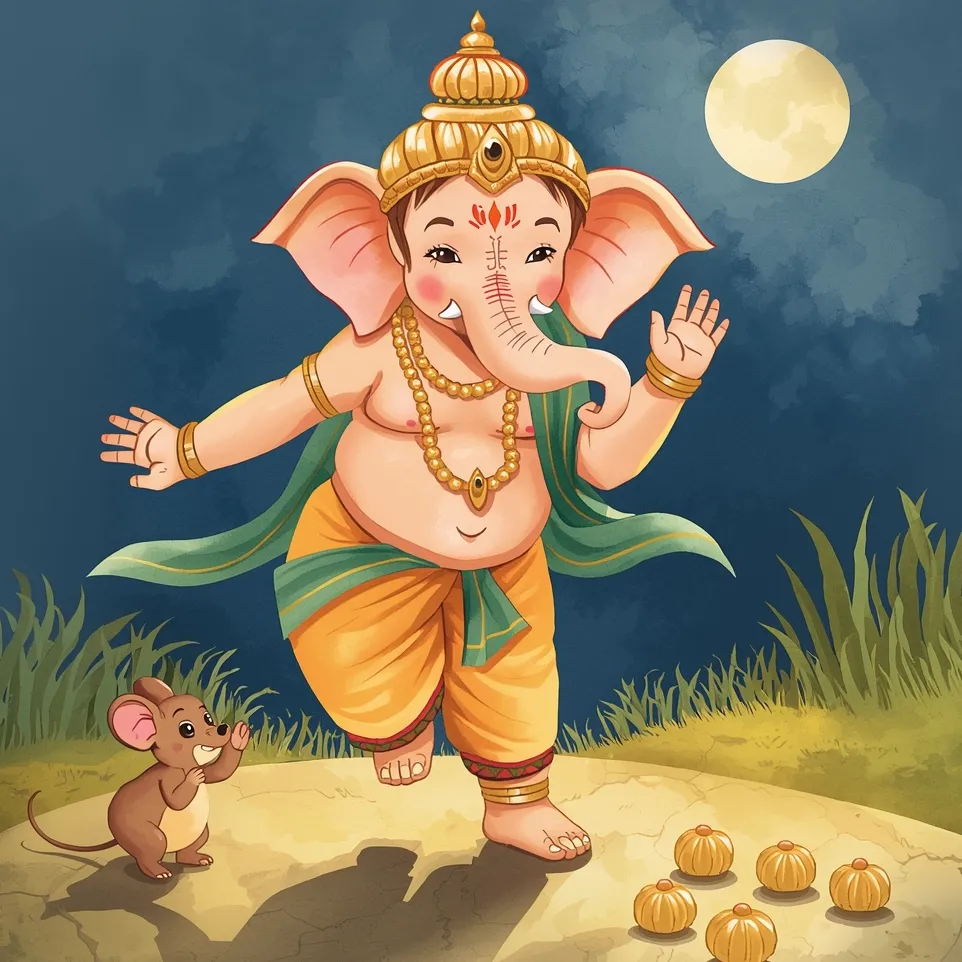
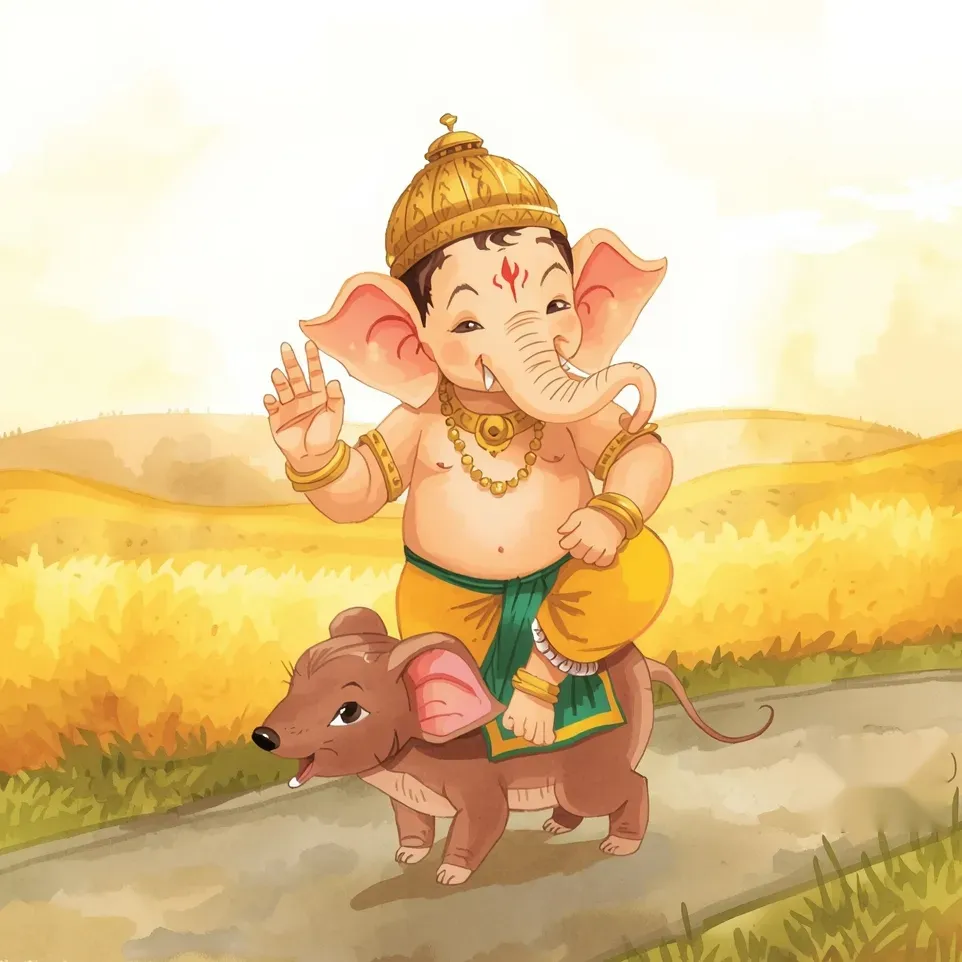
When the moon rose high, Ganesha climbed onto his little mouse, Krauncha, to ride home. But his belly was so full and so round that he wobbled one way, then the other. Down he tumbled into the soft grass, and the modaks went rolling everywhere.
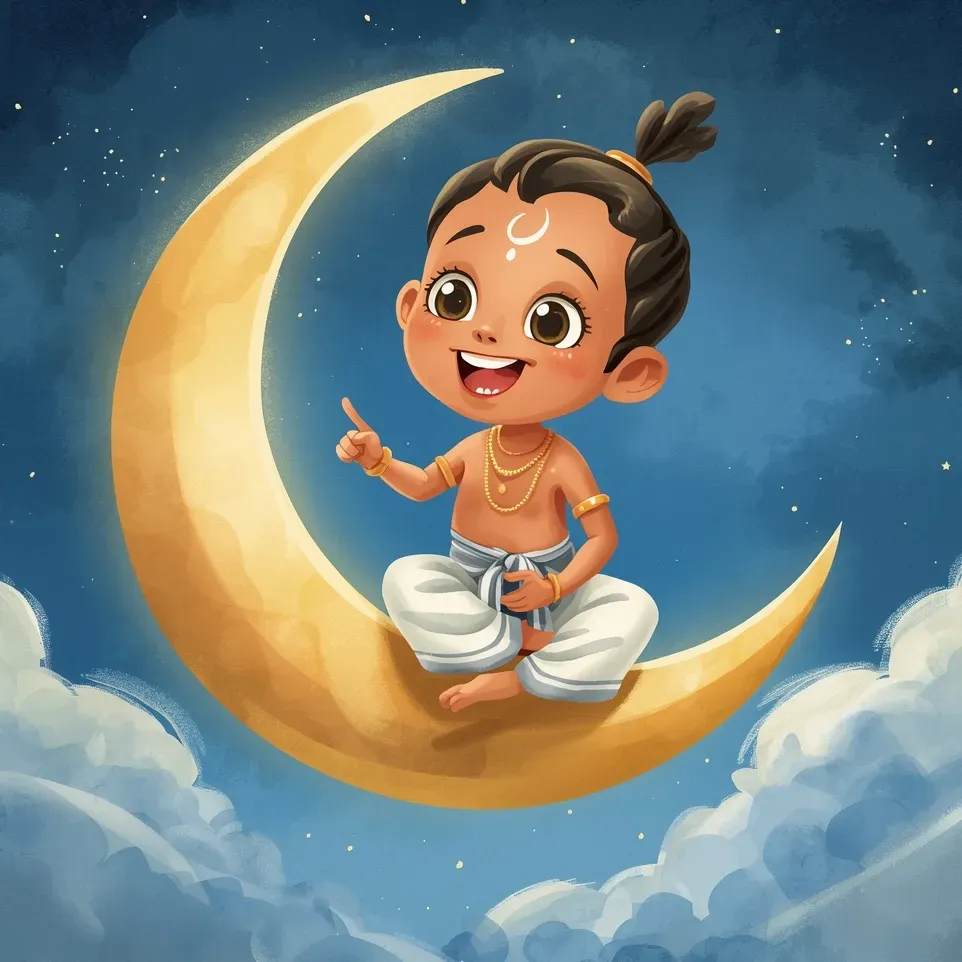
High above, Chandra the moon had seen it all. He laughed — not a warm laugh, but a sharp, silvery one that rang across the whole sky. "Look at him," Chandra giggled, "rolling about like a modak himself!"
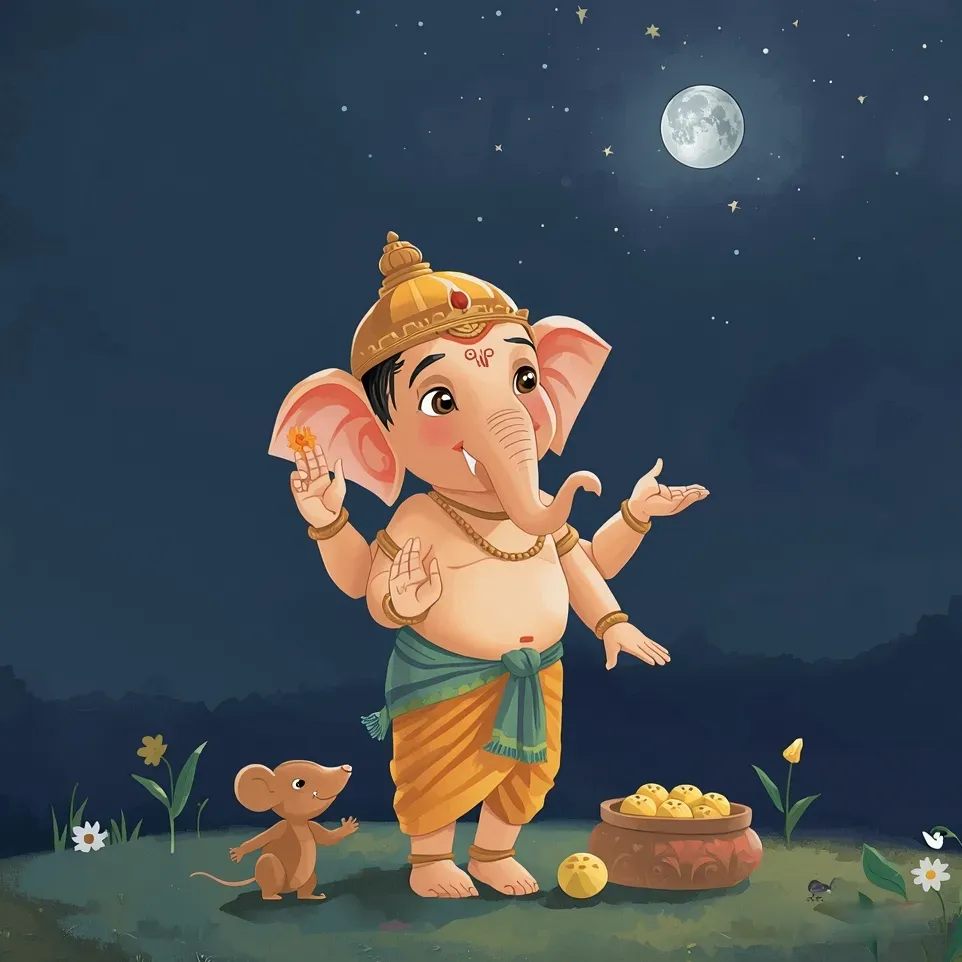
Ganesha stood up slowly and brushed the grass from his dhoti. It is a small thing to fall, he thought, but a hard thing to be laughed at. "Chandra," he said quietly, "you are beautiful. And tonight you used your beauty to make someone else feel small." He raised his hand, and the moon's light faded away, until the sky held nothing but stars.
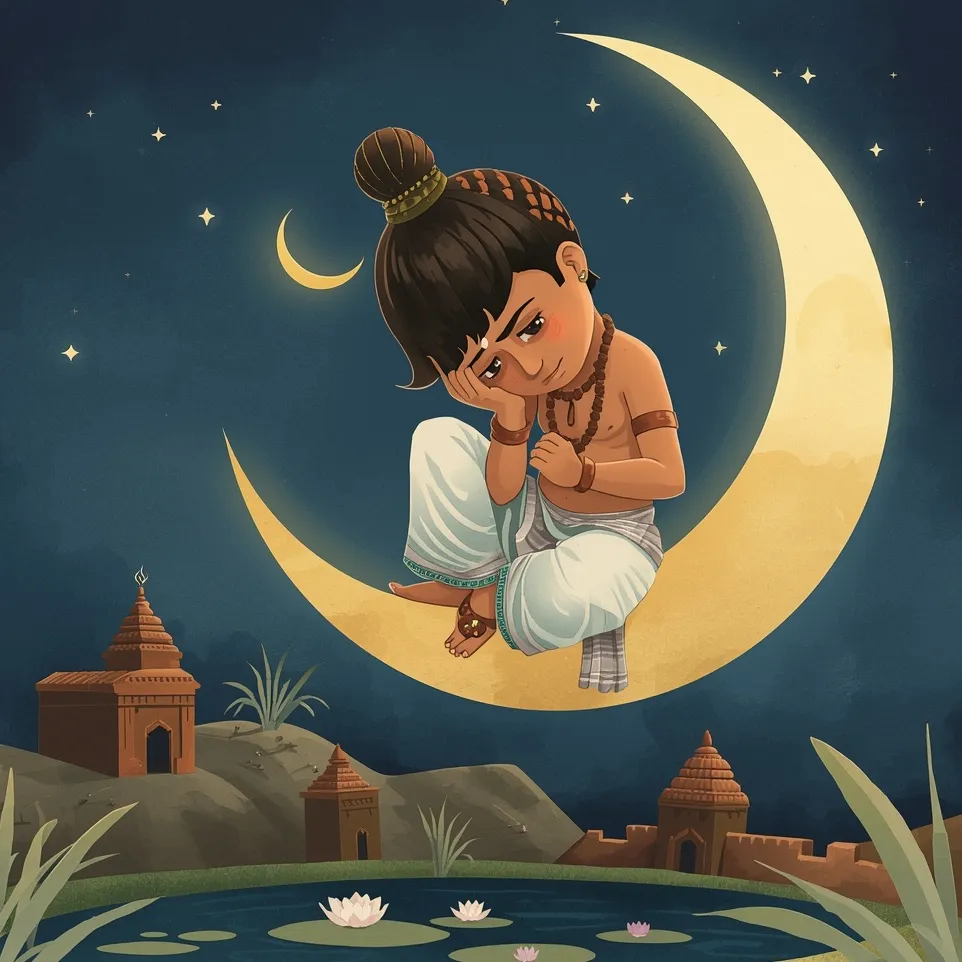
The night grew very dark. Travellers lost their paths. The lotus flowers stayed closed, waiting for a light that never came. Chandra looked down at the dark, quiet world, and his heart grew heavy. He came to Ganesha with his head bowed. "I am sorry," he said. "I laughed because you were different from me. That was an unkind reason to laugh."
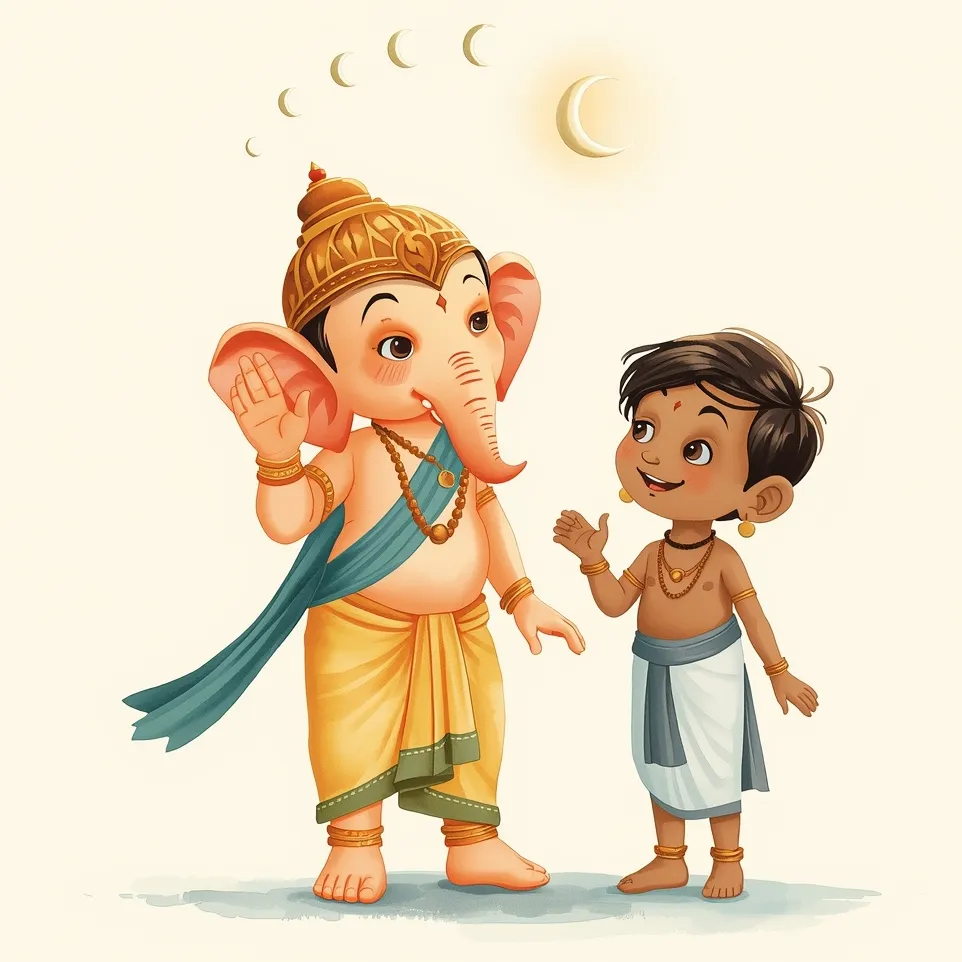
Ganesha smiled, and his smile was warm as a lamp. "Then let us set it right," he said. "You will not be full every night. You will grow — a little each evening — until you are whole again. And each month, as you grow, you will remember." And that is why, even now, the moon grows thin and then round again, over and over, to this very day.
Laughing at someone costs more than it seems, and saying sorry is what makes it right again.
About this story
Retold from: Brahmavaivarta Purana, Ganapati Khanda — the tale of Chandra's laughter, retold gently. The traditional curse is softened into a fading and a reconciliation; the moral survives, the punishment does not.
Bandana
EnglishO Ganapati, remover of obstacles, leader of all beings — we bow to you again and again.
नेपालीहे गणपति — हामी तपाईंलाई बारम्बार नमस्कार गर्छौं।
हिन्दीहे गणपति — हम आपको बार-बार नमस्कार करते हैं।