Ganesha and the Broken Tusk
A story so long nobody could hold it, and the writer who would not stop, even when his pen did.
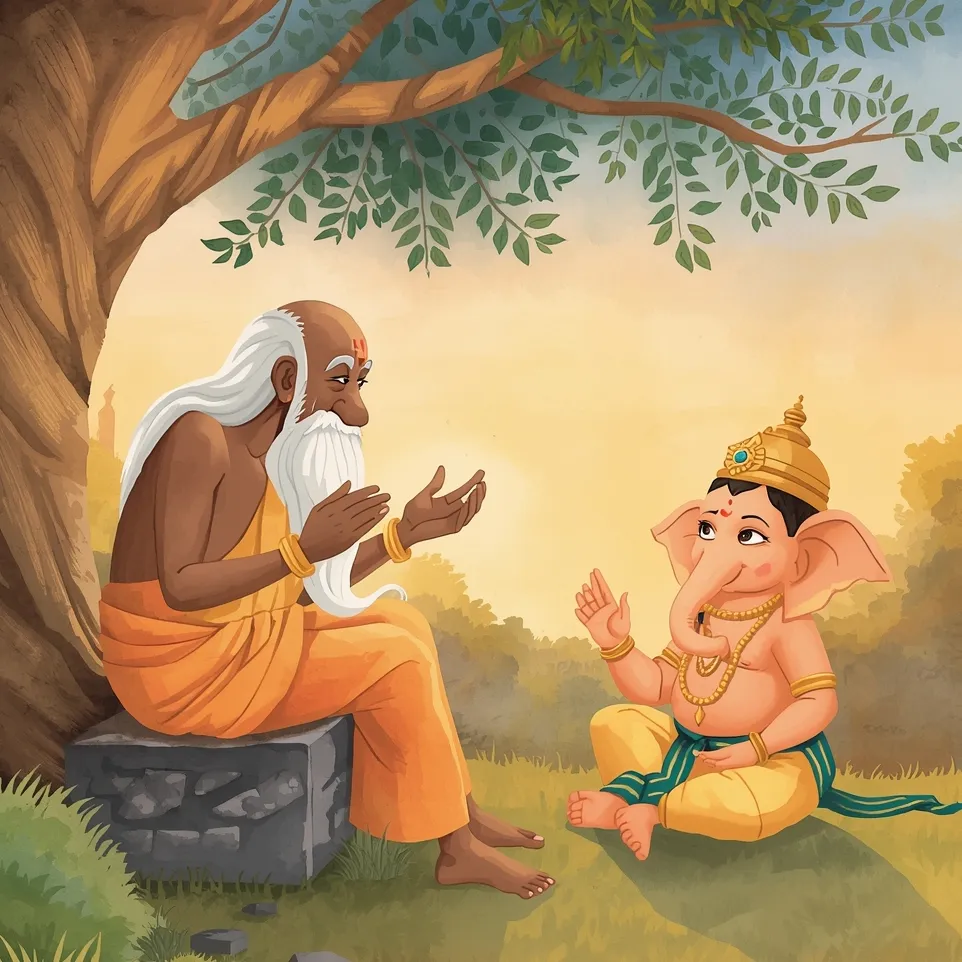
There was once a sage named Vyasa who had a story in his head. It was not a short story. It was the longest story anyone had ever thought of — kings and forests and quarrels and forgiveness, a hundred thousand verses of it, and it was all in there, and it was getting heavier every day. "If I only say it," Vyasa thought, "it will blow away like smoke. Someone has to write it down." But who could write that fast?
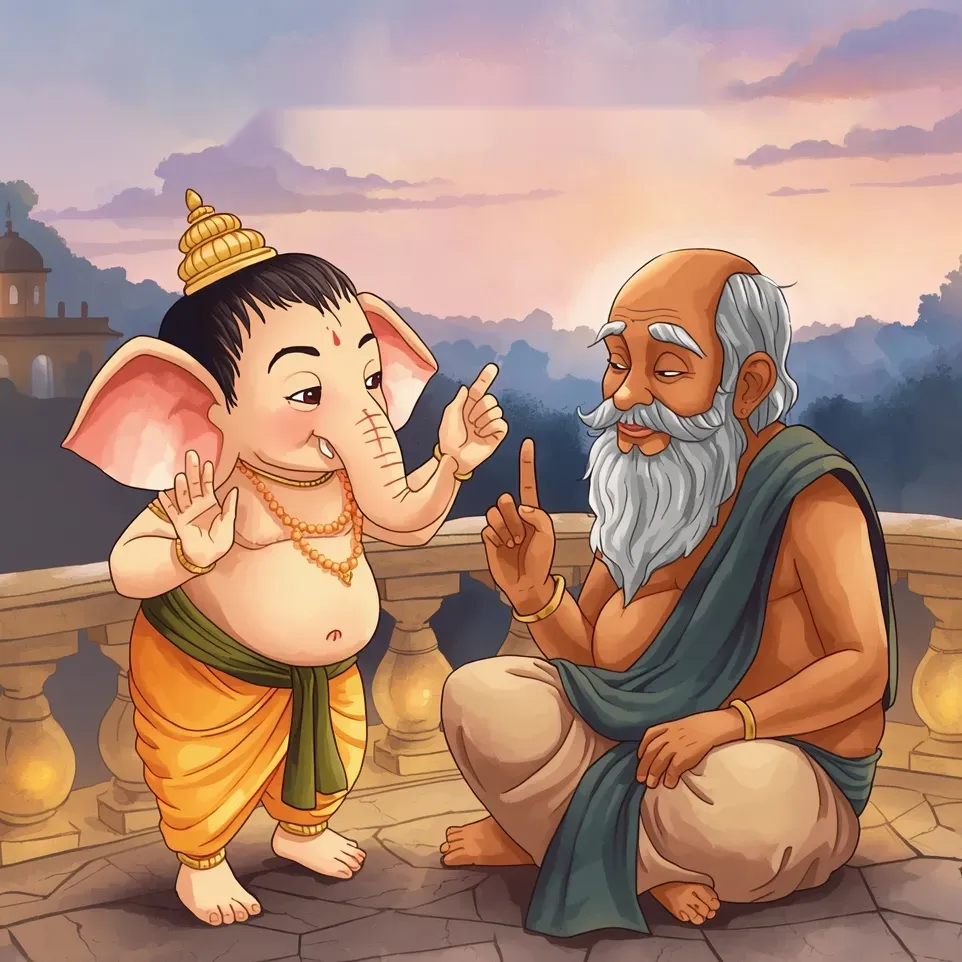
So he went to Ganesha, who was fond of books. "I will do it," said Ganesha. "On one condition. Once I begin, my pen does not stop. You must keep speaking, all the way to the end, without a single pause." Vyasa thought about that for a moment. Then he smiled, because he was a clever old man. "Agreed," he said. "On one condition of my own. You must not write a single line until you have understood it." Ganesha laughed out loud. It was a fair trade. Neither of them was going to have an easy night.
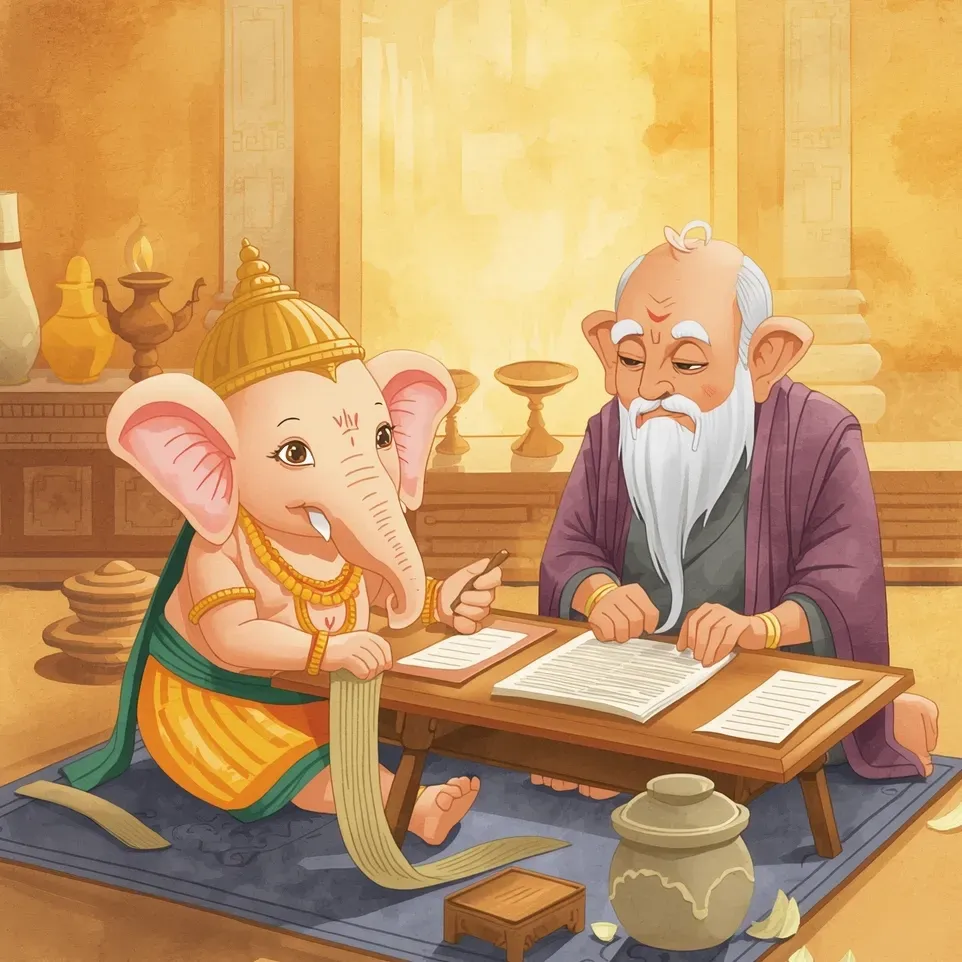
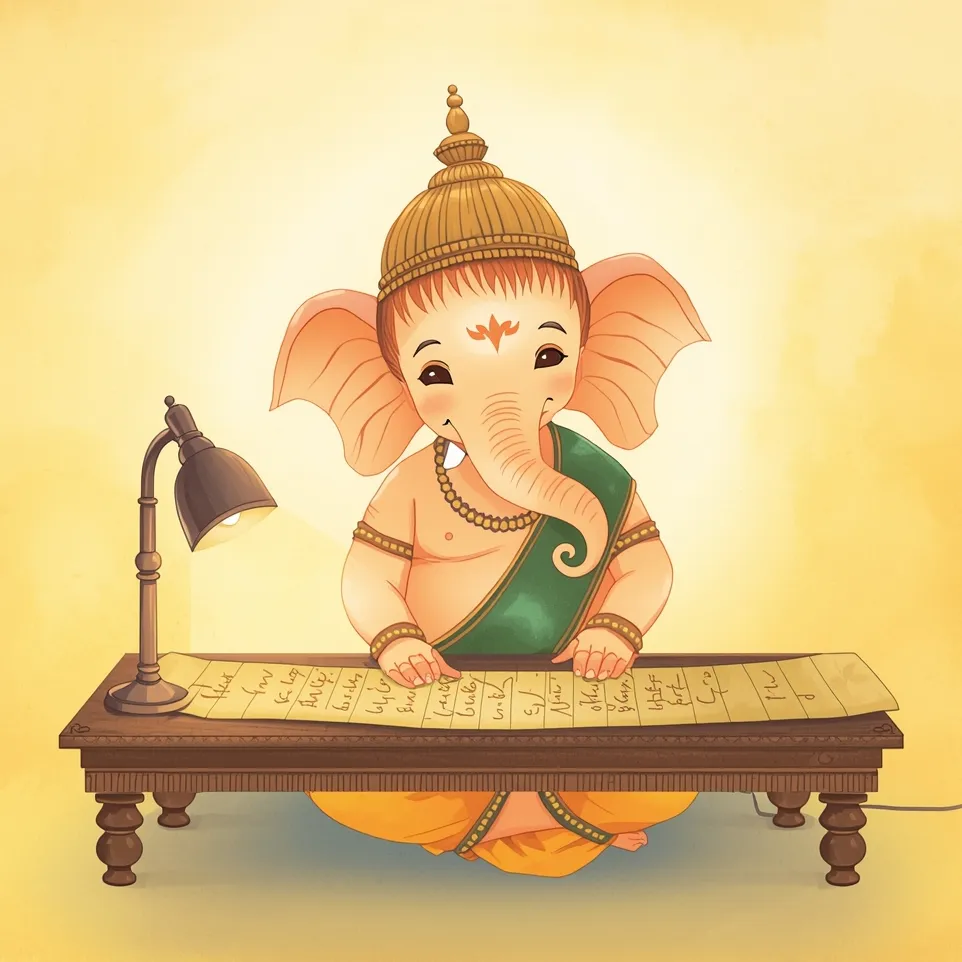
And so it began. Vyasa spoke, and Ganesha wrote, and the palm leaves piled up beside him like fallen petals. When Vyasa needed a moment to think, he said something so tangled and knotted that Ganesha had to stop and puzzle it out — and in that small quiet, Vyasa caught his breath and went on. The lamps burned low. The stack grew. Neither of them stopped.
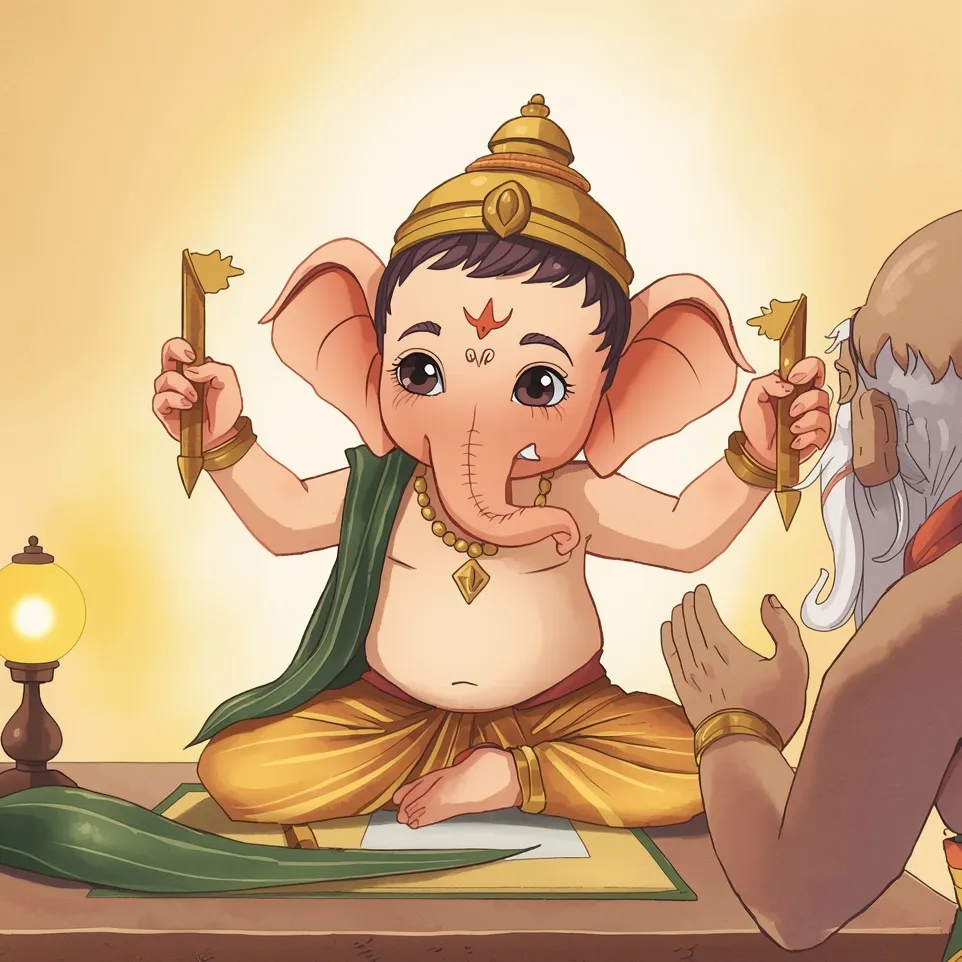
And then, somewhere in the middle of the night, the pen broke. It was only a reed. It had been scratching along for hours, and it simply gave up and snapped in Ganesha's hand. Vyasa was still speaking. He did not know. The story was still coming, line after line after line, and every line that fell now would fall onto nothing and be lost forever.
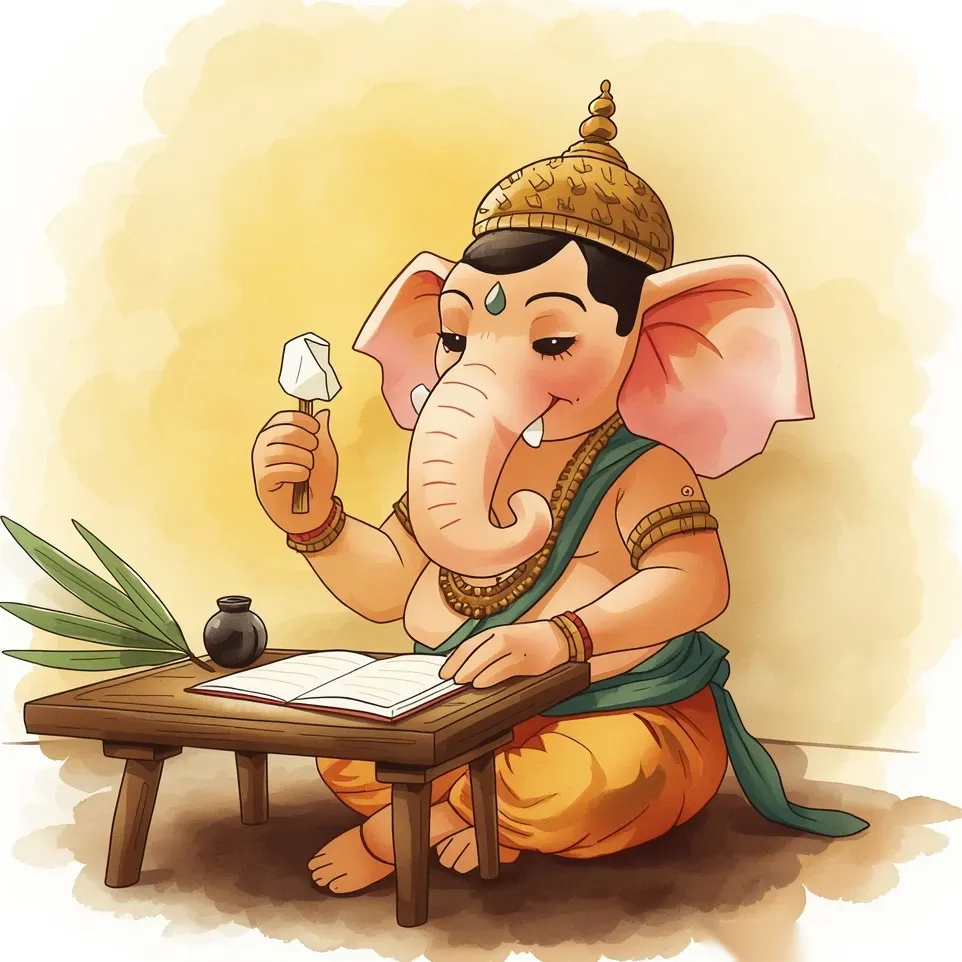
Ganesha did not shout, and he did not go looking for a new pen. He reached up, took hold of one of his own tusks, and broke off the tip. It did not hurt him. He dipped the sharp end into the ink, set it against the leaf, and kept writing — in the very next breath, without missing one word. Vyasa spoke on into the dark, and never knew that the hand beside him had changed its tool.
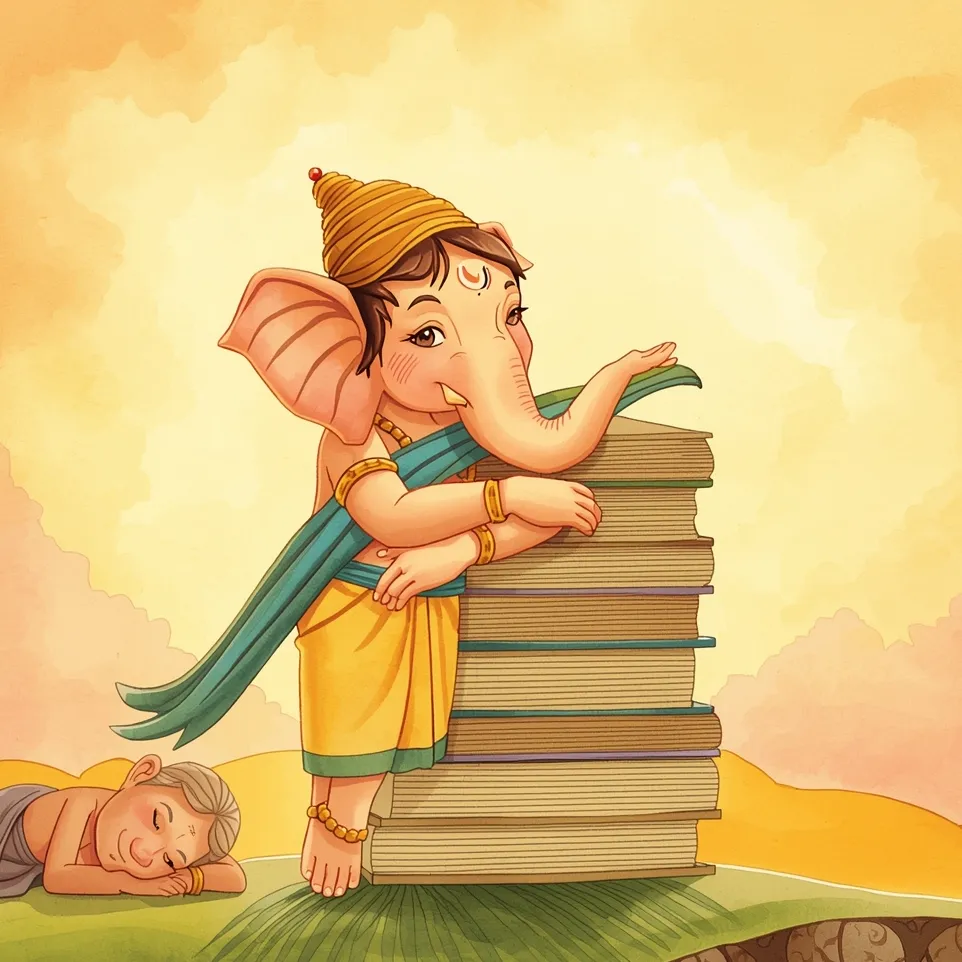
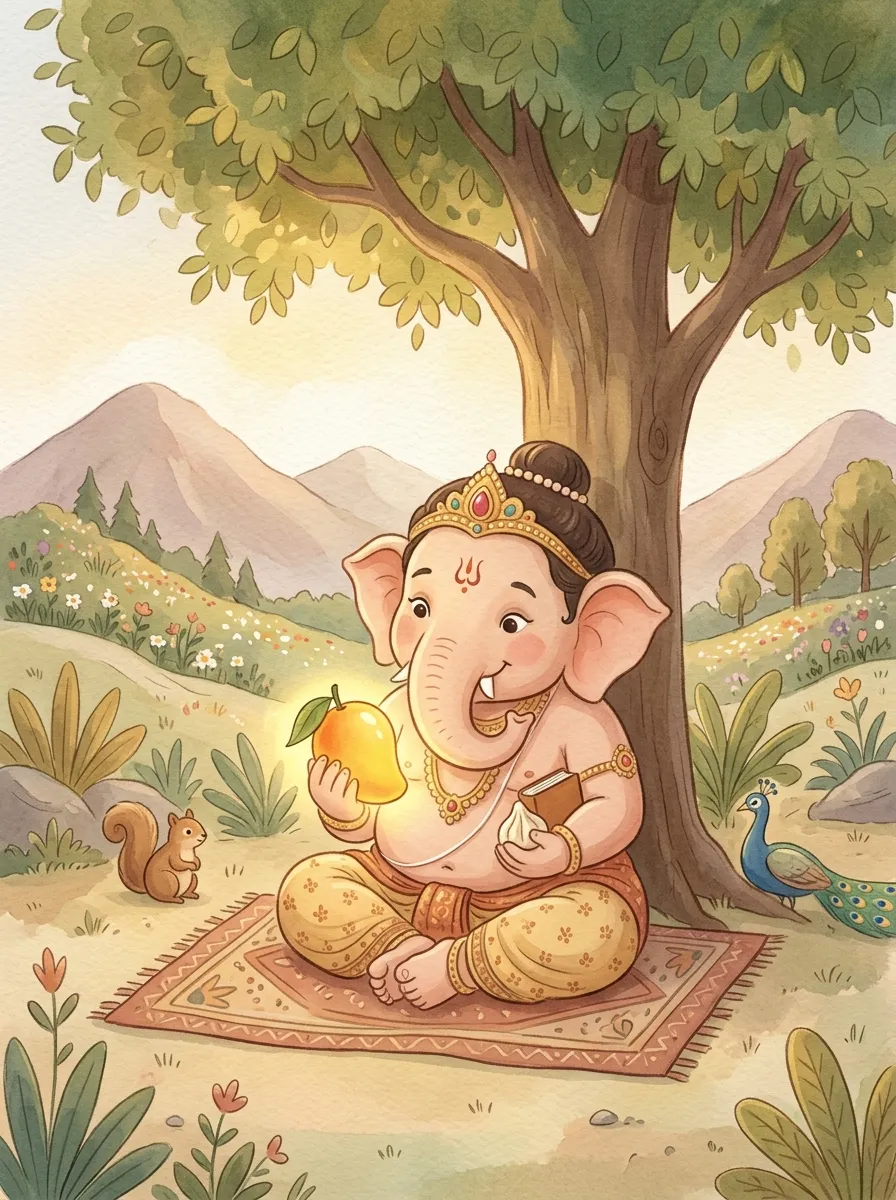
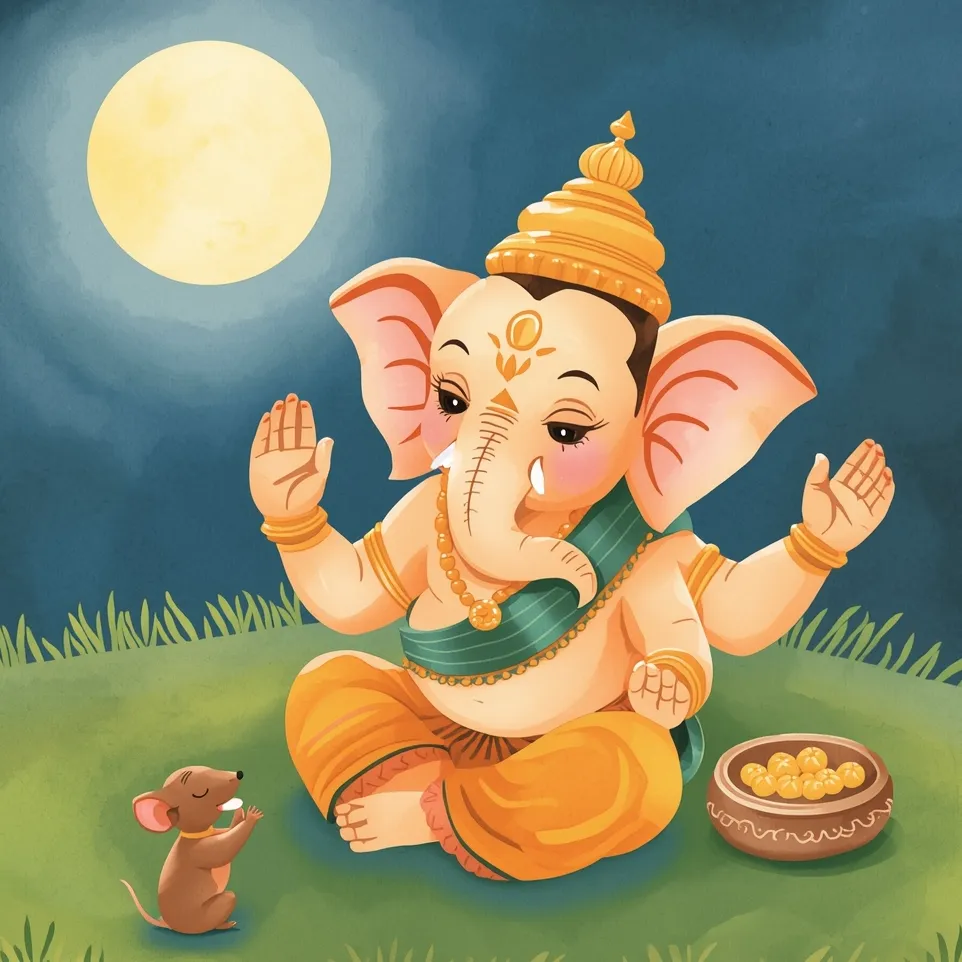
They finished at sunrise. The stack of leaves was taller than Ganesha himself, and every line of it had been understood before it was written. Vyasa fell asleep in the corner. Ganesha put one hand on top of the pile and let out a long, satisfied breath. And that is why, even now, when you see him — in a painting, or carved in stone, or on the very cover of this book — one of his tusks is long and whole, and the other one is short. He is not missing anything. He simply had a job to finish, and he finished it with what he had.
When the tool you were counting on breaks, look at what you already have in your hands.
About this story
Retold from: Mahabharata, Adi Parva — the framing tale of Vyasa dictating the epic and Ganesha writing it down, retold gently. The tusk is broken by Ganesha's own choice and it does not hurt him; the versions where it is thrown or struck off in anger are not used here.
Bandana
EnglishO Ganapati, remover of obstacles, leader of all beings — we bow to you again and again.
नेपालीहे गणपति — हामी तपाईंलाई बारम्बार नमस्कार गर्छौं।
हिन्दीहे गणपति — हम आपको बार-बार नमस्कार करते हैं।